
Why Green Mortgages Matter for Africa’s Growing Cities
As African cities continue to expand, the conversation about housing must evolve beyond construction alone. This article explores how green mortgages can help redefine affordability by recognizing not only what a home costs to buy, but what it costs to own over time.
At a Glance
- Home affordability does not end at purchase: energy, water, maintenance, and backup power shape the true cost of ownership.
- Green mortgages recognize homes that cost less to operate, and can reward buyers with better rates, terms, or borrowing limits.
- Approximately 80 percent of the buildings that will exist in Africa by 2050 have yet to be built, a rare opportunity to design sustainability from the start.
- Most mortgage systems still measure what a home costs to buy, not what it costs to own.
- Closing the gap requires developers, lenders, policymakers, homebuyers, and digital platforms acting together.
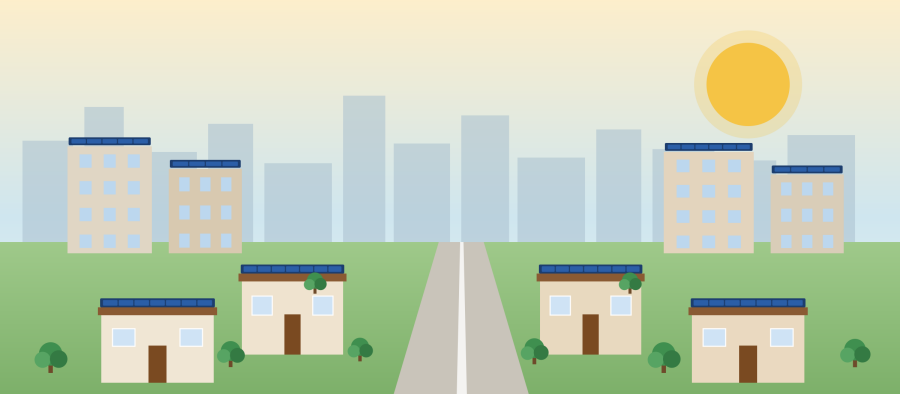
Figure 1. Sustainable housing developments can reduce long-term operating costs while improving resilience in rapidly growing African cities.
Introduction
Africa is urbanizing at one of the fastest rates in the world. According to the United Nations’ World Urbanization Prospects, hundreds of millions of people are expected to move into cities over the coming decades, with African countries such as Nigeria and the Democratic Republic of the Congo among the largest contributors to global urban growth. For governments and developers alike, the challenge is no longer simply building enough homes; it is building homes that remain affordable, resilient, and sustainable throughout their lifetime.
For many prospective homeowners, affordability is often measured by two numbers: the purchase price of a property and the monthly mortgage payment. Yet these figures tell only part of the story.
Once the keys are handed over, homeowners begin paying a different set of bills: Electricity, Water, Maintenance. Over the life of a mortgage, these recurring expenses can represent a significant portion of the true cost of owning a home.
This changes the question every prospective homeowner should ask. Instead of asking:
“Can I afford to buy this home?”
the more important question becomes:
“Can I afford to live in it?”
Green mortgages recognize that two homes with the same purchase price may have very different long-term costs.
Key Takeaway
Home affordability does not end at the point of purchase. The ongoing costs of powering, maintaining, and living in a home are equally important when evaluating long-term affordability.
Figure 2. The purchase price is only one component of a home’s total cost of ownership.
What Is a Green Mortgage?
A green mortgage is a home loan designed to encourage the purchase or construction of energy-efficient and environmentally sustainable homes.
These features may include:
- Rooftop solar photovoltaic (PV) systems
- Energy-efficient lighting and appliances
- High-performance insulation
- Water-saving plumbing fixtures
- Rainwater harvesting systems
- Certified green building designs
Depending on the lender and the market, buyers of qualifying homes may benefit from incentives such as:
- Lower interest rates
- Reduced down payment requirements
- Higher borrowing limits
- Preferential loan terms
A home that consumes less energy and water typically costs less to operate, a point long documented in the World Green Building Council’s research on the business case for green building.
Green mortgage products already operate in markets such as the United States, the European Union, and South Africa, where lenders including Standard Bank and Absa offer preferential home loans for certified green homes. Across most of Sub-Saharan Africa, however, they remain rare. The concept is proven; what is missing is its arrival in the markets that stand to benefit from it most.
| Traditional Mortgage | Green Mortgage |
|---|---|
| Focuses primarily on purchase price and borrower finances | Considers long-term operating costs alongside traditional lending criteria |
| Energy efficiency rarely influences loan terms | Sustainable features may qualify borrowers for incentives |
| Emphasizes upfront affordability | Recognizes lifetime affordability |
| Standard financing approach | Encourages investment in energy-efficient housing |
Table 1 – Traditional Mortgage vs. Green Mortgage
Figure 3. Green mortgages are based on a simple principle: lower operating costs improve long-term affordability.
Buying a home with a mortgage
Developer
Builds and sells
the home
Lender (bank)
Finances the purchase,
holds the home as collateral
Homebuyer
Owns the home
from day one
What a green certificate adds
Green certificate
e.g. EDGE or a green
building council rating,
verifying the home’s efficiency
From the lender
lower interest rate, better loan terms, higher limits
From government and partners
tax breaks, rebates, green credit lines that fund the banks
One certificate can unlock incentives from several organizations at once
Figure 4. Who does what in a green mortgage: the developer builds and sells, the lender finances, and the homebuyer owns and repays. A green certificate can unlock incentives from the lender as well as from government and development partners.
Why Green Mortgages Matter More in African Cities
The case for green mortgages is compelling almost anywhere in the world. In African cities, however, the need is even more urgent because three major trends are converging at the same time: energy insecurity, rapid urbanization, and increasing climate risk.
1. Energy Costs Extend Beyond the Utility Bill
The International Energy Agency notes that unreliable electricity supply remains one of the region’s most persistent challenges, with around 600 million people across Africa still lacking access to electricity altogether. In many cities, unreliable grid power means households must also budget for:
- Diesel or petrol for backup generators
- Batteries and inverter systems
- Generator maintenance
- Unexpected power outages and fuel price fluctuations
A home designed with rooftop solar systems, energy-efficient lighting, improved insulation, and efficient appliances can reduce dependence on expensive backup power while lowering monthly operating costs.
Illustrative monthly cost of ownership
Index: conventional home total = 100. Illustrative proportions, not market data.
Figure 5. Lower operating costs improve long-term affordability, even when purchase prices are similar. Proportions shown are illustrative, not market data.
2. Africa’s Housing Boom Creates a Unique Opportunity
Unlike regions where much of the housing stock already exists, the World Green Building Council estimates that approximately 80 percent of the buildings that will exist in Africa by 2050 have yet to be built. Decisions made today will shape affordability, resilience, and energy consumption for decades.
Designing sustainability into new developments is generally more cost-effective than retrofitting buildings after construction. In other words: Every home built today represents an opportunity to reduce tomorrow’s cost of homeownership.
Key Takeaway
Africa’s housing challenge is not only about building more homes; it is about building homes that remain affordable to own throughout their lifetime. Every home built today represents an opportunity to reduce tomorrow’s cost of homeownership.
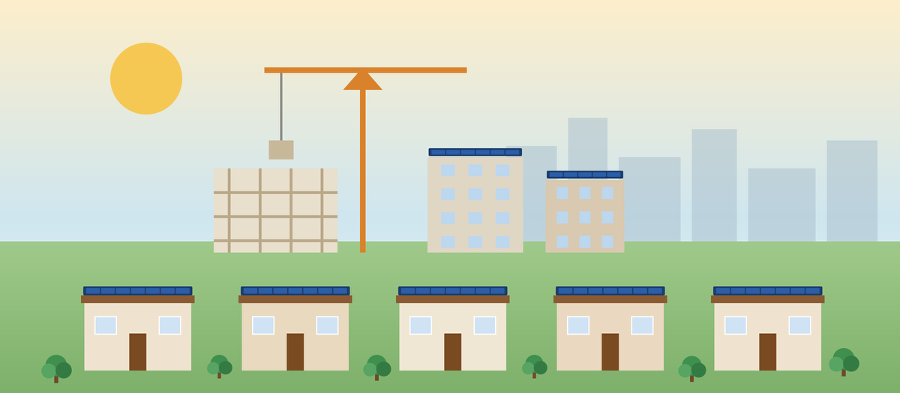
Much of Africa’s future housing stock has yet to be built, creating an opportunity to integrate sustainability
from the beginning.
3. Climate Resilience Has Financial Value
African cities are increasingly experiencing climate-related challenges such as flooding, extreme heat, changing rainfall patterns, and water stress. The Intergovernmental Panel on Climate Change’s most recent synthesis report emphasizes that climate-resilient development is becoming increasingly urgent as cities adapt to growing climate risks.
Homes built with better drainage systems, improved insulation, resilient construction materials, and efficient water management are often better equipped to withstand these conditions while requiring fewer costly repairs over time.
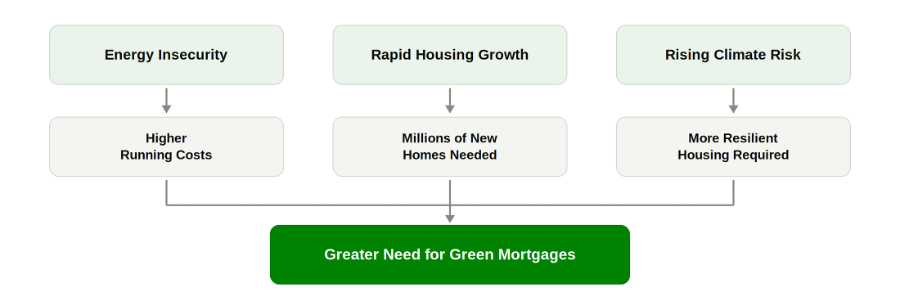
Figure 6. Green mortgages sit at the intersection of Africa’s energy, housing, and climate challenges.
The Financing Gap Nobody Talks About
The scale of the challenge is well documented: the Centre for Affordable Housing Finance in Africa’s annual yearbook highlights both the depth of the continent’s housing finance gap and the significant housing deficits in countries such as Nigeria. Yet despite growing interest in sustainable housing, one significant barrier remains: the way many mortgages are evaluated has not evolved alongside the homes they finance.
Traditional mortgage underwriting typically focuses on factors such as:
- Household income
- Employment history
- Creditworthiness
- Property value
- Loan-to-value ratio
These are essential measures of financial risk. However, they often overlook another important consideration:
How much will this home cost to operate over the next 15 to 30 years?
Features such as rooftop solar systems, energy-efficient appliances, water-saving fixtures, and green building certifications can significantly reduce long-term household expenses. Yet these features are often treated as optional upgrades rather than financial assets that improve affordability.
As a result, two homes with similar purchase prices, but very different operating costs, may receive almost identical mortgage assessments.
Key Insight
Most mortgage systems evaluate what a home costs to buy, not what it costs to own. That distinction explains why green mortgages have become an increasingly important part of the conversation around sustainable housing finance.
Table 2 – What Traditional Mortgage Assessments Measure
| Common Lending Criteria | Often Overlooked Factors |
|---|---|
| Household income | Monthly energy savings |
| Employment | Reduced water consumption |
| Credit score | Lower operating costs |
| Property value | Climate resilience |
| Loan-to-value ratio | Long-term affordability |
Figure 7. Green mortgages expand affordability assessments by considering long-term operating costs alongside traditional lending criteria.
Closing the Financing Gap
Creating a more sustainable housing market is not the responsibility of a single organization. It requires coordinated action across the entire housing ecosystem.
Developers
Developers play an important role by integrating sustainability into new housing projects from the outset. A growing network of green building councils across the continent, coordinated through the World Green Building Council’s Africa Regional Network, now supports developers with certification tools, training, and best practices.
Financial Institutions
Lenders have an opportunity to expand how affordability is assessed by considering long-term operating costs alongside traditional financial indicators. International guidance is emerging to support this shift: the United Nations Environment Programme Finance Initiative has published a toolkit to help financial institutions finance energy-efficient buildings, and the International Finance Corporation argues that aligning financial products with sustainable buildings can encourage investment in more resource-efficient housing and support long-term market development.
Homebuyers
Prospective homeowners should evaluate more than the purchase price and monthly mortgage payment. Questions about electricity costs, maintenance, water consumption, and long-term operating expenses are equally important when comparing homes.
Technology Providers
Digital mortgage platforms can simplify application processes, improve transparency, streamline documentation, and support financing models that incorporate sustainability considerations. Technology alone does not create green mortgages, but it makes them easier to deliver at scale.
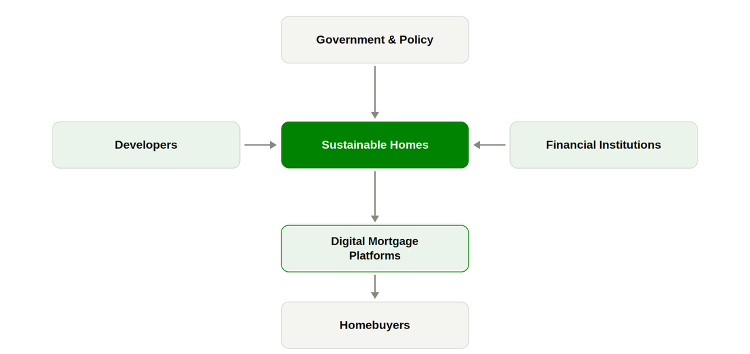
Figure 8. Green mortgages succeed when housing, finance, policy, and technology work together.
Key Takeaway
Green mortgages are not simply another financial product. They represent a new way of thinking about housing affordability, one that recognizes the financial value of lower operating costs, greater resilience, and long-term sustainability.
Where Digital Mortgage Platforms Fit In
While green mortgages offer a compelling way to improve long-term affordability, delivering them at scale requires mortgage systems that are transparent, efficient, and capable of handling more than traditional lending data. The International Finance Corporation has similarly emphasized that expanding access to affordable housing across Africa depends on scaling and modernizing the systems through which housing finance is delivered.
Across many markets, the home financing process still relies heavily on manual documentation, fragmented communication, and paper-based workflows. Digital mortgage platforms help address these challenges by modernizing the mortgage journey from application to approval.
For homebuyers, this can mean:
- Applying for a mortgage online
- Uploading and verifying documents digitally
- Tracking application progress in real time
- Receiving greater transparency throughout the approval process
For developers and financial institutions, digital platforms can improve operational efficiency through:
- Digital document management
- Standardized application workflows
- Faster communication between stakeholders
- Improved data quality and auditability
- Better visibility across the mortgage lifecycle
These improvements benefit mortgage lending generally, but they become particularly valuable when financing sustainable homes, where additional information, such as energy-efficient building features, renewable energy systems, or sustainability certifications, may also need to be assessed.
Green&Smart Mortgage: A Practical Example
One example of this approach is Green&Smart Mortgage, a digital mortgage platform developed to simplify and modernize the home financing experience. By bringing mortgage applications, documentation, and stakeholder collaboration into a single digital workflow, the platform helps reduce many of the administrative barriers traditionally associated with home financing.
Within the broader conversation around green mortgages, platforms like Green&Smart Mortgage demonstrate how digital infrastructure can support more efficient financing processes while creating opportunities for lenders, developers, and homebuyers to better incorporate sustainability into housing finance.

Figure 9. Digital mortgage platforms streamline the financing journey while improving transparency and efficiency.
Key Takeaway
Digital mortgage platforms do not create green mortgages. They create the infrastructure that makes innovative financing models easier to deliver, manage, and scale.
Conclusion
Africa’s housing challenge is often discussed in terms of how many homes need to be built. Yet the larger challenge is ensuring those homes remain affordable, resilient, and practical to live in throughout their lifetime.
As cities continue to expand, affordability can no longer be measured solely by a property’s purchase price or its monthly mortgage payment.
Green mortgages represent an important step toward recognizing this broader definition of affordability. By considering the long-term operating performance of a home, they encourage investment in housing that is not only environmentally responsible but also financially practical.
Ultimately, the future of homeownership is not simply about helping more people buy homes. It is about helping people own homes they can truly afford to live in.
Final Key Takeaway
A home’s purchase price tells you what it costs to buy. Its operating costs tell you what it costs to own. Green mortgages bring those two realities together, helping redefine affordability for the next generation of homeowners.
References
Centre for Affordable Housing Finance in Africa. (2024). 2024 yearbook: Housing finance in Africa (15th ed.). Centre for Affordable Housing Finance in Africa. https://housingfinanceafrica.org/library/2024-housing-finance-in-africa-yearbook-15th-edition/
Green Building Council South Africa. (n.d.). Get a green home loan for your green home. Green Building Council South Africa. https://www.gbcsa.org.za/news/get-a-green-homeloan-for-your-green-home/
Intergovernmental Panel on Climate Change. (2023). Climate change 2023: Synthesis report. Contribution of Working Groups I, II and III to the Sixth Assessment Report of the Intergovernmental Panel on Climate Change. IPCC. https://www.ipcc.ch/report/ar6/syr/
International Energy Agency. (2022). Africa energy outlook 2022. International Energy Agency. https://www.iea.org/reports/africa-energy-outlook-2022
International Finance Corporation. (2019). Green buildings: A finance and policy blueprint for emerging markets. International Finance Corporation. https://www.ifc.org/en/insights-reports/2019/green-buildings-a-finance-and-policy-blueprint-for-emerging-markets
International Finance Corporation. (2024). Scaling housing finance in Africa. International Finance Corporation. https://www.ifc.org/
United Nations Department of Economic and Social Affairs, Population Division. (2025). World urbanization prospects 2025. United Nations. https://population.un.org/wup/
United Nations Environment Programme Finance Initiative. (2021). Financing energy-efficient buildings: Toolkit for financial institutions. UNEP Finance Initiative. https://c2e2.unepccc.org/wp-content/uploads/sites/3/2021/08/en-toolkit-financial-institutions.pdf
World Green Building Council. (2013). The business case for green building. World Green Building Council. https://worldgbc.org/advancing-net-zero/the-business-case-for-green-building/
World Green Building Council. (2023). Africa manifesto for sustainable cities and the built environment. World Green Building Council. https://worldgbc.org/worldgbc-africa-manifesto/
World Green Building Council. (2024). Africa Regional Network. World Green Building Council. https://worldgbc.org/africa/



Written By